A film crew has been working Mulberry Street for weeks now, setting up shots between the espresso carts and the folding tables where vendors are pricing out sausage-and-pepper heroes for a crowd that hasn't arrived yet. They've already filmed in Naples, in Benevento, in Pozzuoli, tracing the story back to the saint the whole thing is named for. Now they're back on the block where it actually happens, gathering interviews with people who've lived through more Feasts than most residents have lived here at all. The documentary is called "The Streets of Little Italy: 100 Years of San Gennaro," narrated by Armand Assante, and it's chronicling the same eleven-day stretch of Mulberry Street that's about to close to traffic for the hundredth consecutive September.
That production crew is a useful way into what's actually different about this year's Feast of San Gennaro, which runs September 17 through 27. It isn't the food, which hasn't changed much in a century. It's the scale of the centennial attention, which brings the Feast's long history into focus.
The Math Behind the Anniversary
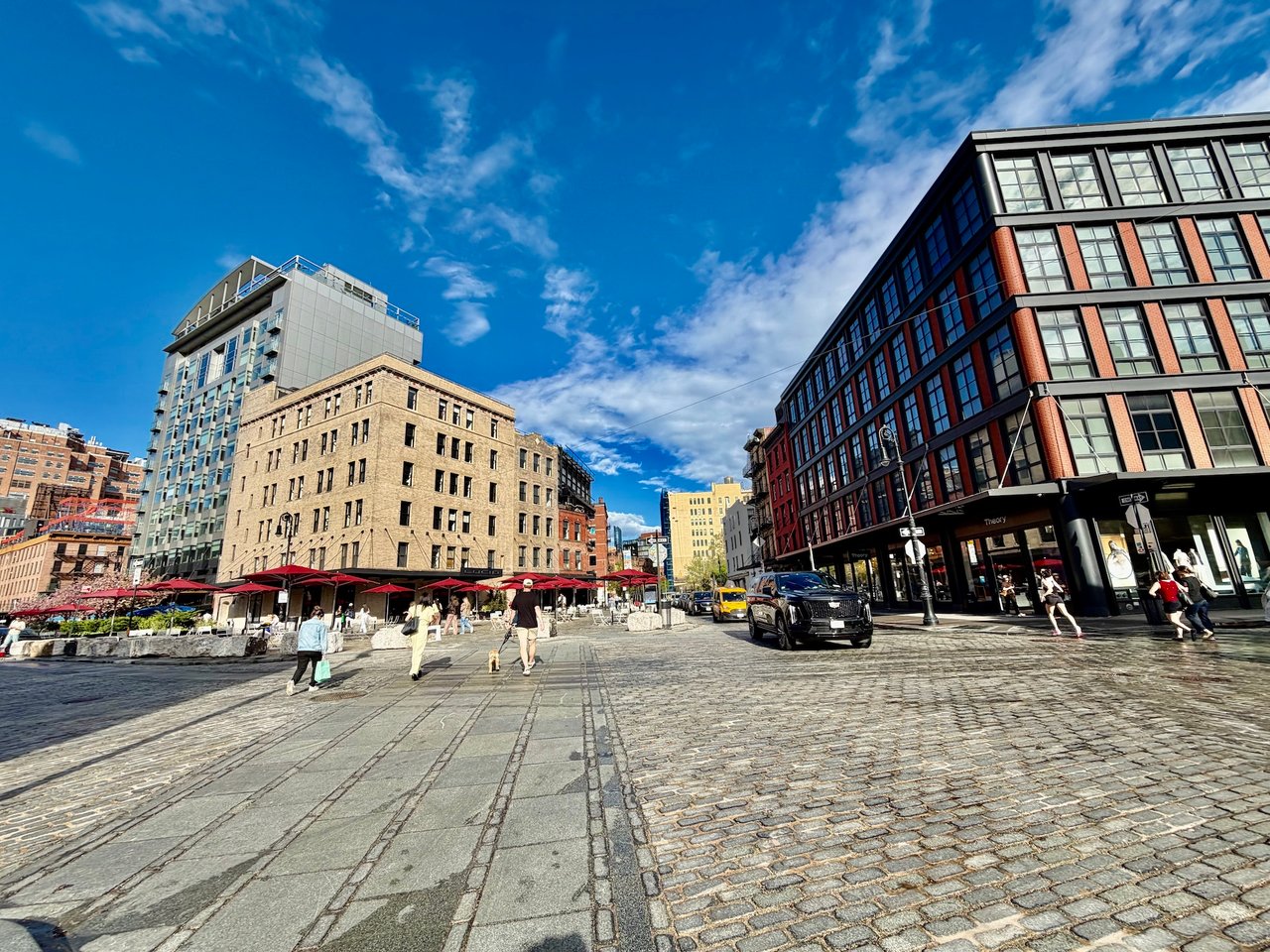
At its peak, the Feast stretched across eleven blocks and drew hundreds of vendors into a neighborhood shaped by its Italian immigrant roots. Today it fills three blocks of Mulberry Street, not eleven.
This year's anniversary adds a feature documentary, expanded centennial programming, and reportedly the largest press turnout the event has seen. For people who live within a few blocks of Mulberry Street, the centennial offers an opportunity to reflect on the Feast's place in Little Italy's history.
Two Dates, Not One
If you're planning around the closures, know that the Feast has two distinct high points this year, not one. The Solemn High Mass honoring San Gennaro is scheduled for September 19 at 2 p.m. at the Shrine Church of the Most Precious Blood on Baxter Street, the National Shrine Church of San Gennaro in the United States. The Grand Procession, when the saint's statue is carried down Mulberry and Mott between Canal and Houston with marching bands, is scheduled separately for September 26 at 2 p.m.
That split matters if you're trying to time your week around the crowds. September 19 draws people for the religious observance. September 26 draws people for the parade itself, and it's the closer of the two to the anniversary's actual climax. Neither one is a good day to expect a quiet walk to the subway.
The organization behind all of it, Figli di San Gennaro, has run the Feast since 1996 and has directed more than $2 million to local charities and community organizations over that span. That's a detail that tends to get lost under the food stalls and the cannoli-eating contests, but it's the part of the Feast that's actually rooted in the neighborhood's present, not just its past. The festival's charitable arm is a working civic institution. The eleven days of sausage and zeppole are how it funds itself.
A Pizzeria Moves in Next Door
L'Industrie Pizzeria, the Williamsburg slice shop that's spent years building a reputation as one of the city's best, opened its third New York location at 197 Grand Street, between Mulberry and Mott. That address puts it directly next door to Ferrara Bakery & Cafe, the 134-year-old institution that's been serving cannoli and espresso to the neighborhood since long before anyone was filming a documentary about it.
The team behind the new shop didn't rush into it. Owners Massimo Laveglia and Nick Baglivo, along with partner Manuel Jimenez, spent three years and looked at more than twenty locations across the city before landing on Grand Street, the twenty-fifth spot they scouted. That patience says something about how contested this stretch of Little Italy has become as a retail address. A slice shop with a cult following didn't have to settle for whatever storefront came open first. It could wait three years for the right one, and the right one turned out to be a few doors from Ferrara.
The documentary crew and the new pizzeria are two developments around Little Italy this year, one on film and one on Grand Street.
If You Live Inside the Closure Zone
For residents who'll be navigating the actual footprint of the Feast for eleven days, a few practical notes worth keeping in mind:
- The core closures run along Mulberry Street between Canal and Houston, with additional festival activity on Hester Street between Baxter and Centre, and on Grand Street between Baxter and Centre Market Place.
- Weekday afternoons, especially in the first few days of the run, are the lightest crowds you'll see. Friday and Saturday evenings are the heaviest by a wide margin, and this centennial year is expected to draw larger numbers than a typical September.
- Plenty of vendors take cards, but a meaningful share of the smaller family-run stalls are cash only. If you're planning to eat your way through the block, carry some cash rather than counting on a nearby ATM, since those lines tend to build fast once the evening crowds arrive.
- For subway access, the 6 train to Spring Street or Canal Street, the B, D, F, and M to Broadway-Lafayette, and the J and Z to Bowery all put you within a short walk of the festival footprint. Driving down isn't practical once the street closures are in place.
None of that changes year to year. What changes this year is the scale of everything layered on top of it: heavier press coverage, a documentary crew working the block for weeks, and a centennial designation that's pulling in visitors who might otherwise have skipped a Tuesday in September.
A hundred years is a long run for a single street to sustain a tradition. What's kept it alive includes an organization that still funds itself off eleven days a year, a shrine church that's held its ground on Baxter Street since the community around it was still forming, and now a documentary crew trying to get the story on film. The Feast got smaller in footprint and bigger in spectacle at the same time, and this year that gap is part of the story.
If you're watching how a block like Mulberry Street holds its identity as the neighborhood around it continues to change, that's the kind of pattern worth understanding before you make a move in a neighborhood like this one, whether you already call it home or you're weighing whether to. The team at Howard Hanna NYC spends a lot of time thinking about exactly that kind of shift in Manhattan's smaller, more storied pockets. If you'd like to talk through what it means for your own plans, Schedule a Call.