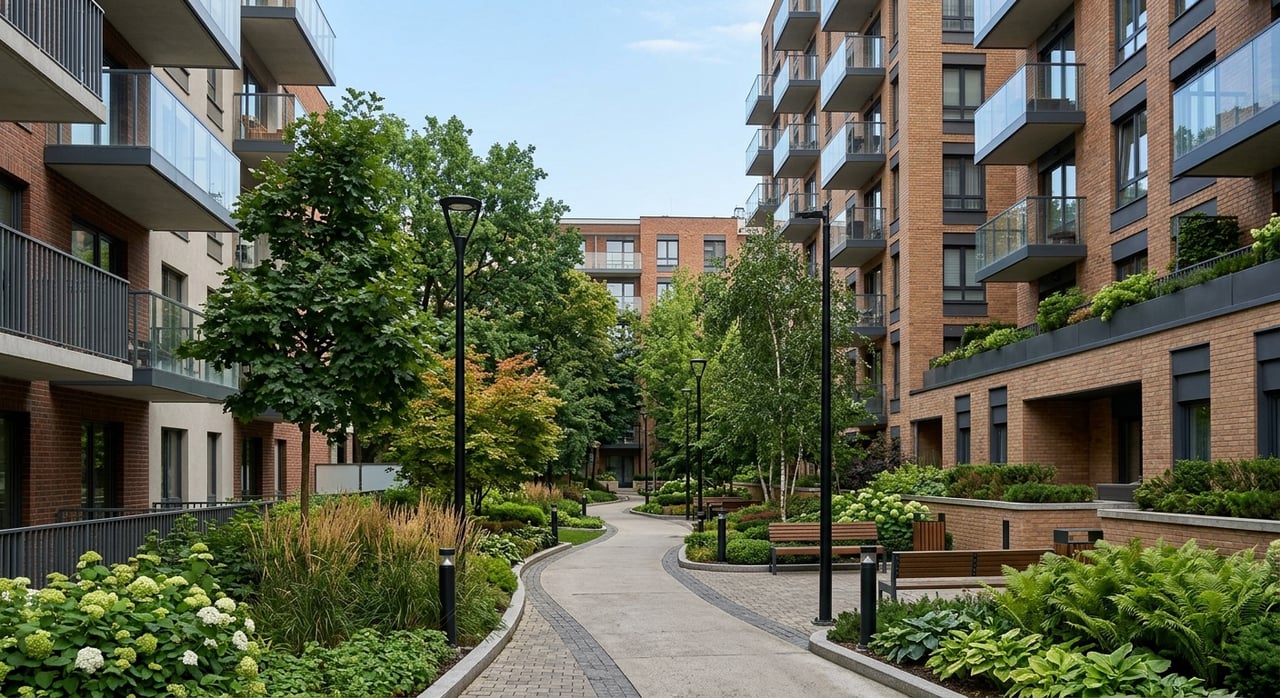
Relocating to New York City can feel like choosing between convenience and breathing room. If you want strong transit, open space, and a calmer day-to-day routine without leaving the city behind, Roosevelt Island deserves a closer look. For many relocation buyers, it offers a rare middle ground: residential, connected, and easier to settle into than some faster-paced neighborhoods. Let’s dive in.
Why Roosevelt Island stands out
Roosevelt Island is a two-mile-long island in the East River between Manhattan and Queens. According to the Roosevelt Island Operating Corporation, it is a planned, mixed-use residential community built around pedestrianization and serves about 12,000 people today. That planning history helps explain why daily life here often feels more orderly and less hectic than many nearby NYC neighborhoods.
For relocation buyers, that difference can matter right away. You may be learning a new city, adjusting to a new commute, and trying to find a home that supports your routine from day one. Roosevelt Island offers a setting that feels more residential and self-contained, while still keeping Manhattan and Queens close.
A calmer version of NYC living
One of Roosevelt Island’s biggest strengths is how it feels on an ordinary weekday. StreetEasy describes it as narrow, quiet, and small-town in character. The island also has little through traffic, no traffic lights, and limited parking, which adds to its slower, more walkable rhythm.
That does not mean it feels isolated. It means your immediate environment may feel less noisy and less crowded than many relocation buyers expect from NYC. If you are moving from another city and want time to adjust without giving up urban access, that can be a real advantage.
Transit is better than many buyers expect
A common concern with Roosevelt Island is whether it feels too tucked away. In practice, the island has multiple transit options. RIOC says Roosevelt Island is served by the tram, the subway, and the NYC Ferry Astoria Line.
The tram runs between Tramway Plaza and East 60th Street and Second Avenue, with rush-hour service every 7.5 minutes and off-peak service every 15 minutes. RIOC’s current subway information says the Roosevelt Island station has M-train service on weekdays and F-train service nights and weekends. The NYC Ferry Astoria Route also stops on the island and connects Roosevelt Island with East 90th Street, Astoria, Long Island City, East 34th Street, Brooklyn Navy Yard, and Wall Street/Pier 11.
For relocation buyers, that mix can make the transition easier. You are not relying on a single way in or out. You also have options depending on your work schedule, preferred route, or how you want to move through the city on a given day.
Daily life is built for walking
Because Roosevelt Island is less than two miles long, many daily routines stay local and simple. StreetEasy says the neighborhood is ideal for walking, and the island’s layout supports that. You can build a lifestyle around short local trips, waterfront paths, and straightforward access to transit.
That can be especially appealing if you are relocating from a more car-dependent area. Instead of jumping straight into the intensity of a dense commercial corridor, you get a neighborhood where the pace is easier to read. For many buyers, that makes the move to NYC feel more manageable.
Housing is apartment-focused
If you are considering Roosevelt Island, it helps to know what the housing stock looks like. RIOC says the island’s residential development began with Island House in 1975, followed by Eastwood, Westview, and Rivercross. Later projects such as Manhattan Park, the Octagon, and Riverwalk added more market-rate, rental, condominium, and affordable units.
In simple terms, Roosevelt Island is mostly a large-scale apartment market. You are not shopping for brownstones or single-family homes here. For many relocation buyers, that can actually simplify the search because the housing types are more consistent and building living is the norm.
Market context for relocation buyers
Roosevelt Island may feel quieter than many Manhattan locations, but it is still very much part of the NYC market. StreetEasy currently shows a median sale price of $920K and a median base rent of $4,325 for the neighborhood. The same source lists a 52-day median sales pace.
Those figures are best used as directional context, not a promise of what any one apartment will cost. Still, they help frame Roosevelt Island as a serious option for buyers who want Manhattan proximity without the same street-level intensity as more commercial neighborhoods.
Open space is a major advantage
For many people moving to NYC, outdoor space becomes more valuable once daily life begins. Roosevelt Island stands out here. RIOC says Southpoint Park spans about seven acres and sits between Cornell Tech and FDR Four Freedoms State Park, with views of Manhattan and Queens along with native flowers and plants.
New York State Parks says FDR Four Freedoms State Park is located on the southern tip of the island, is free to the public, and was designed by Louis I. Kahn. Cornell Tech also adds a 12-acre green, public-space-rich academic precinct on the island’s southern end. Together, these spaces give the island a more open and expansive feel than many relocation buyers expect in NYC.
On-island amenities support everyday routines
Roosevelt Island is not just about views and transit. It also offers practical amenities that support everyday life. RIOC describes Sportspark as the island’s recreation facility, with a pool, a full-size basketball court, fitness areas, and public access through membership or drop-in options.
For buyers who want community resources close to home, that can be meaningful. RIOC also operates a Youth Center for children and teens ages 7 to 18 with enrichment programming. In addition, PS/IS 217 Roosevelt Island is a fully accessible PK-8 school located at 645 Main Street.
These details matter because relocation is not just about the apartment itself. It is also about whether the neighborhood can support your routine once the boxes are unpacked.
The main tradeoff to understand
Roosevelt Island works well for many relocation buyers, but it is not the right fit for everyone. StreetEasy notes that the island has only a handful of restaurants and stores. That means you may gain more calm and open space, but you will have fewer spontaneous retail and nightlife options right outside your door.
This is the central tradeoff. If you want a dense restaurant scene, a lot of shopping, or the feel of a classic Manhattan commercial corridor, you may find Roosevelt Island too quiet. If you value a more contained residential environment with reliable transit and room to breathe, the tradeoff may feel worth it.
How Roosevelt Island compares nearby
Roosevelt Island vs Upper East Side
Compared with the Upper East Side, Roosevelt Island is less commercially dense and more contained. StreetEasy describes the Upper East Side as lively and packed with restaurants, bars, coffee shops, supermarkets, libraries, and cultural sites. Roosevelt Island, by contrast, has far fewer retail and dining options.
StreetEasy’s current snapshots show a median sale price of $920K on Roosevelt Island compared with $1.2M on the Upper East Side. Median base rent is listed at $4,325 on Roosevelt Island versus $3,950 on the Upper East Side, though housing mixes differ and those figures should be treated as directional. If your priority is quiet and open space, Roosevelt Island may feel more comfortable. If your priority is having more options directly outside your building, the Upper East Side may be the stronger fit.
Roosevelt Island vs Astoria and Long Island City
Roosevelt Island also sits in an interesting position relative to nearby Queens neighborhoods. StreetEasy describes Astoria as having busy shopping districts and a strong food scene. Queens Community Board 2 describes Long Island City as a rapidly developing waterfront neighborhood with parks and an arts community.
Current StreetEasy snapshots show Astoria with a median sale price of $877K and median base rent of $3,000, while Long Island City shows a median sale price of $950K and median base rent of $4,320. In practical terms, Roosevelt Island is the more insulated and residential option, while Astoria and Long Island City offer more street life and commercial variety.
Who Roosevelt Island tends to suit best
Roosevelt Island often makes sense for buyers who want a soft landing in NYC. If you are relocating for work or family and want a neighborhood that feels organized, walkable, and connected, it can check a lot of boxes. The island is especially compelling if green space, views, and a calmer local routine matter to you.
It may also appeal if you want apartment living in a place where the residential character is clear from the start. You are choosing a neighborhood with a defined identity, not one that shifts block by block from quiet to chaotic. For many buyers moving from outside New York, that predictability is valuable.
How to evaluate fit before you buy
When you are relocating, neighborhood fit is just as important as price or square footage. Roosevelt Island tends to be a stronger match if you want:
- A quieter residential setting
- Walkable daily routines
- Multiple transit options
- Easy access to green space
- Apartment-style housing with established building communities
It may be a weaker match if you want:
- A dense restaurant and nightlife scene
- Heavy retail right outside your building
- The feel of a traditional Manhattan commercial corridor
- A wider mix of housing types such as townhouses or brownstones
A good relocation strategy is to test your daily routine, not just the address. Think about commute patterns, grocery runs, outdoor habits, and how much you care about having dining and shopping options at street level.
Why guidance matters for relocation buyers
Even in a neighborhood that feels straightforward, relocation moves come with extra layers. You may be balancing timelines, learning building differences, and narrowing down what matters most in your first NYC home. That process gets easier when you have clear neighborhood context and a decision framework built around your routine.
At Howard Hanna NYC (Elegran), our approach is advisor-led and process-driven, with the local NYC insight and relocation support many buyers need when making a move from outside the city. If Roosevelt Island is on your shortlist, we can help you compare it with nearby options, evaluate building tradeoffs, and move forward with more clarity.
Ready to explore whether Roosevelt Island fits your move? Connect with Howard Hanna NYC (Elegran) for thoughtful, hands-on guidance tailored to your relocation goals.
FAQs
Is Roosevelt Island a good neighborhood for NYC relocation buyers?
- Roosevelt Island can be a strong fit if you want a quieter residential setting, strong transit access, open space, and a walkable daily routine while staying close to Manhattan and Queens.
What transportation options does Roosevelt Island offer residents?
- Roosevelt Island is served by the tram, subway service at the Roosevelt Island station, and the NYC Ferry Astoria Route, giving residents multiple ways to travel on and off the island.
What type of housing is most common on Roosevelt Island?
- The housing stock is mostly large-scale apartment living, including rentals, condominiums, affordable housing, and other multifamily residential buildings rather than brownstones or single-family homes.
How expensive is Roosevelt Island compared with nearby NYC neighborhoods?
- StreetEasy currently shows Roosevelt Island with a median sale price of $920K and median base rent of $4,325, which places it directionally below the Upper East Side on median sale price and near Long Island City on median rent.
What amenities support daily life on Roosevelt Island?
- Roosevelt Island offers open space, waterfront walking paths, Southpoint Park, FDR Four Freedoms State Park, Sportspark recreation facilities, a youth center, and PS/IS 217 Roosevelt Island.
What is the biggest tradeoff of living on Roosevelt Island?
- The main tradeoff is that Roosevelt Island offers more calm and open space but fewer restaurants, stores, and nightlife options than more commercially dense neighborhoods nearby.