Looking for a Brooklyn neighborhood that feels calm, connected, and unmistakably New York? Carroll Gardens stands out for exactly that mix. If you are drawn to classic brownstones, walkable shopping streets, and an easy neighborhood rhythm built around parks and local cafés, this guide will help you understand what makes the area so appealing. Let’s dive in.
Why Carroll Gardens Feels Distinct
Carroll Gardens has a clear identity within brownstone Brooklyn. It sits south of Cobble Hill and Boerum Hill and east of Red Hook, with a historic core centered on Carroll Street and President Street between Smith Street and Hoyt Street. The Carroll Gardens Historic District was established in 1973, which helps explain why the neighborhood’s streetscape feels so consistent and recognizable.
What many buyers notice first is the scale. Instead of tall towers or heavily commercial blocks, you are more likely to see low-rise row houses, mixed-use avenues, and tree-lined residential streets. That physical pattern supports a quieter, more residential feel while still keeping daily needs close at hand.
Brownstones Define the Streetscape
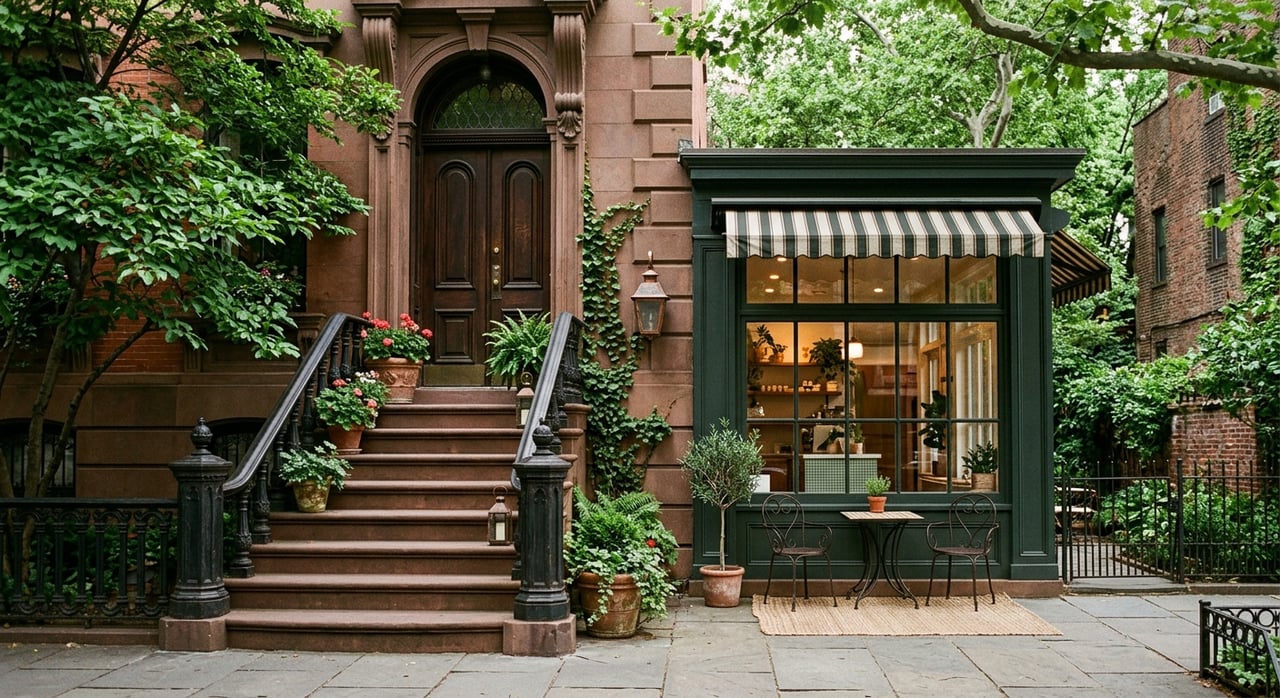
The neighborhood’s best-known housing stock is its mid-19th-century brownstones and row houses. Many of these homes have unusually deep front gardens, a feature shaped by an 1846 Brooklyn law. That detail gives Carroll Gardens a look that is hard to confuse with anywhere else in the city.
Today, the dominant residential pattern remains 3- to 4-story row houses, along with some 4- to 5-story multi-family apartment buildings. For buyers who want architectural character and a lower-rise environment, that consistency can be a major draw. For sellers, it also helps frame why block-by-block nuance matters when positioning a home.
What Buyers Often Notice First
If you are exploring Carroll Gardens for the first time, a few features tend to stand out right away:
- Deep front gardens that create extra visual space from the sidewalk
- Brownstone and brick row houses with a classic Brooklyn feel
- Residential blocks that feel quieter than larger avenue corridors
- A neighborhood scale that supports walking for errands and weekend plans
That combination can be especially appealing if you want a home that feels rooted in its surroundings rather than interchangeable with other parts of the city.
Shops and Cafés Shape Daily Life
Carroll Gardens is not just about architecture. Its day-to-day appeal also comes from neighborhood retail corridors that support an easy routine. Smith Street and Court Street are the area’s main local shopping streets, organized as 3- and 4-story mixed-use blocks with ground-floor commercial space and residences above.
In the Columbia Street area, Columbia Street and Union Street also serve as retail corridors. This gives the broader neighborhood a mix of classic brownstone blocks and more varied edges, with storefront activity woven into the residential fabric. For many residents, that means you can move between quiet streets and busier errand routes in just a few minutes.
A Strong Weekend Rhythm
One of the clearest examples of neighborhood routine is the Carroll Gardens Greenmarket. It runs year-round on Sundays from 8:00 a.m. to 2:00 p.m. on Carroll Street between Smith and Court Streets, alongside Carroll Park and P.S. 58. That kind of recurring weekly event can make the neighborhood feel especially lived-in and connected.
For buyers thinking beyond square footage, this matters. A neighborhood’s rhythm often shapes how your home feels day to day. In Carroll Gardens, the combination of cafés, small shops, and a regular Sunday market helps create a lifestyle that feels both local and practical.
Parks Add Everyday Breathing Room
Green space is another major part of Carroll Gardens’ appeal. Carroll Park is a small park with athletic facilities, a comfort station, and a playground, according to NYC Parks. Coffey Park is listed as a large park with athletic facilities, a comfort station, and a playground.
These are useful neighborhood amenities because they support different kinds of daily use. Whether you want a nearby playground, room for recreation, or simply a change of scene on a walk, local parks help break up the built environment and add flexibility to daily life.
Nearby Waterfront Option
Just beyond the neighborhood, Brooklyn Bridge Park offers a much larger outdoor destination. The park spans 85 acres and includes riverfront promenades, gardens, and skyline views. While it is not in the middle of Carroll Gardens, it is close enough to broaden the neighborhood’s outdoor options.
This matters if you are weighing long-term livability. Some neighborhoods offer charming streets but limited green space. Carroll Gardens benefits from both local parks and access to a larger waterfront park nearby.
The Leafy Reputation Has Real Support
Carroll Gardens is often described as leafy, and there is data that helps support that reputation. NYC Parks’ tree map for the broader Carroll Gardens-Columbia Street-Red Hook area shows 5,667 mapped trees. That geography is broader than Carroll Gardens alone, but it still reinforces the area’s green visual character.
Transit Supports a Car-Light Routine
Transit is another reason Carroll Gardens works well for many buyers, renters, and relocating households. Current MTA maps show the F and G trains serving Carroll Street, Bergen Street, and Smith-9 Sts. Smith-9 Sts is an elevated local station on both lines.
Bus service adds another layer of access. The B57 includes stops at Smith St/9 St and Court St/W 9 St and runs between Red Hook and Maspeth. The B61 runs Park Slope, Red Hook, and Downtown Brooklyn via Van Brunt Street, Columbia Street, and 9th Street, including a stop at Columbia Street and Carroll Street.
Taken together, these routes make a car-light routine plausible for many residents. If you are planning a move, that can be an important quality-of-life factor, especially when you want flexibility without depending on a car for everyday errands.
A Helpful Area for Different Home Searches
Carroll Gardens can appeal to more than one type of buyer or renter. If you are looking for a townhouse or brownstone, the neighborhood offers one of Brooklyn’s most recognizable row-house environments. If you are more focused on apartment living, the area also includes multi-family buildings and more mixed housing conditions along its edges.
The Columbia Street side is more varied than the brownstone core. It includes former manufacturing buildings converted to apartments, along with New York City Partnership homes. That variation can be useful if you want to compare classic streetscape appeal with a somewhat different building mix nearby.
What to Keep in Mind When You Search
If you are considering Carroll Gardens, it helps to evaluate the neighborhood through a practical lens, not just a visual one. A beautiful block is important, but so is how your daily life will function once you are there.
Here are a few smart points to compare as you tour homes:
- Block feel: Is the home on a quieter residential street or closer to a retail corridor?
- Housing type: Are you looking at a row house, apartment building, or a converted property near the neighborhood edge?
- Outdoor access: How close are you to Carroll Park, Coffey Park, or a route toward Brooklyn Bridge Park?
- Transit options: Which F, G, or bus stops are most practical for your routine?
- Weekend lifestyle: Would nearby shops, cafés, and the Sunday greenmarket play a real role in how you live?
This kind of framework can help you move from broad interest to a more confident decision.
Why Advisory Guidance Matters Here
On the surface, Carroll Gardens can seem straightforward. In practice, buyers and sellers often need a more detailed read on housing type, block context, and value differences across a small area. A townhouse search can be very different from an apartment search, even within the same few streets.
That is where local guidance becomes useful. When you have an advisor who can help you compare block character, property type, and day-to-day livability, it becomes easier to focus on the homes that truly fit your goals rather than just the ones that photograph well.
If you are thinking about buying, selling, renting, or relocating in Brooklyn, Howard Hannah NYC (Elegran) offers a high-touch, NYC-focused advisory experience built to help you move with clarity and confidence.
FAQs
What makes Carroll Gardens brownstones different from other Brooklyn row houses?
- Carroll Gardens brownstones are especially known for their unusually deep front gardens, a feature shaped by an 1846 Brooklyn law, along with a dominant pattern of 3- to 4-story row houses.
What streets have the main shops and cafés in Carroll Gardens?
- Smith Street and Court Street are the main local retail corridors in Carroll Gardens, with Columbia Street and Union Street also serving retail activity in the Columbia Street area.
What parks are in or near Carroll Gardens?
- Carroll Park and Coffey Park are local neighborhood parks, and Brooklyn Bridge Park is a larger nearby waterfront park with promenades, gardens, and skyline views.
What subway lines serve Carroll Gardens?
- The F and G trains serve Carroll Street, Bergen Street, and Smith-9 Sts, giving the neighborhood direct subway access.
Is Carroll Gardens a good fit for a car-light lifestyle?
- The combination of F and G subway service plus bus routes like the B57 and B61 makes a car-light routine plausible for many residents.
What kind of housing can you find in Carroll Gardens?
- The neighborhood is best known for mid-19th-century brownstones and row houses, but it also includes multi-family apartment buildings and a more mixed building pattern near Columbia Street.