Manhattan real estate is both dense and vertical, two traits which can, unfortunately, amplify the damage to both life and property during a disaster.
However, Manhattan real estate’s resiliency and recovery, in the face of catastrophe, is exceptional as we explore in the following case studies:
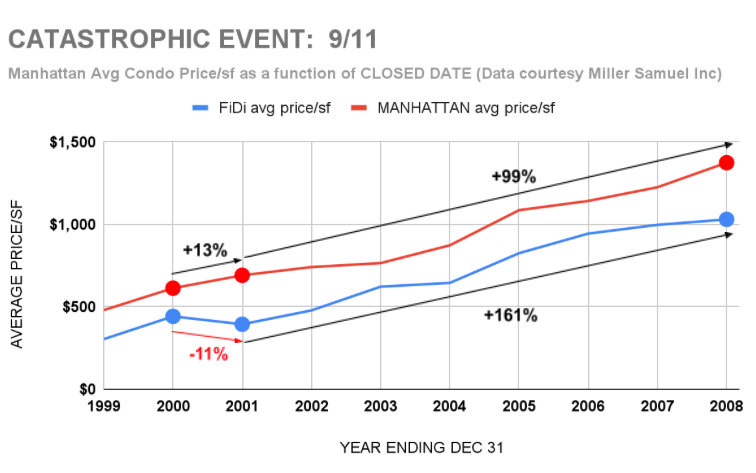
As New Yorkers remember all too well, the attacks on the World Trade Center occurred on September 11, 2001. As of year-end 2001, despite the trauma and fear that ensued, Manhattan’s average condo price per square foot had increased nearly 13% over the year prior. And even the Financial District (“FiDi”) which, of course, was the site of the terrible atrocity, had given back less than 11% of the prior year’s price/sf watermark. Over the next seven years, Manhattan's average price/sf doubled, while FiDi's average price/sf increased by 161%.
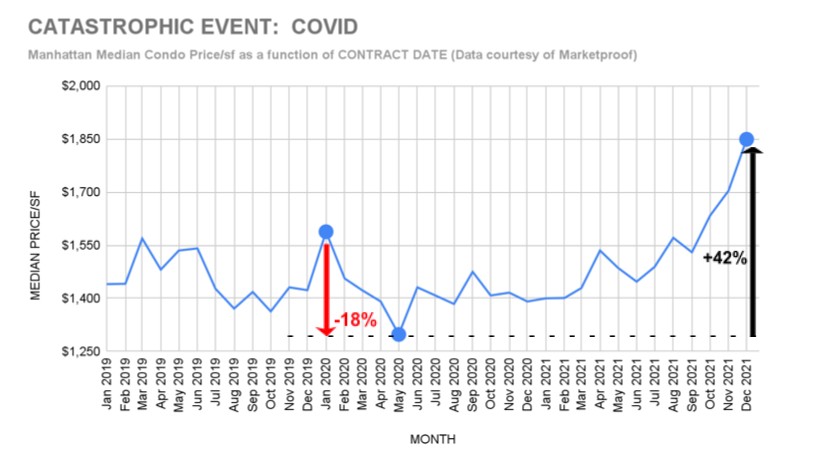
In January 2020, just before the words “Coronavirus” and “COVID” entered our vocabulary and the virus began its deadly onslaught on NYC, Manhattan median condo price per square foot had posted a month of solid gain. However, over the next 4-months, price/sf slid 18%, briefly breaking through the $1,400/sf support level established in the second half of 2019. And, after trading along that support level through Q1–2021, condo price/sf appreciated a dramatic 42% to finish out 2021.
As these two unfortunate tragedies illustrate, Manhattan residential real estate (represented by condominium price/sf) dips modestly, recovers quickly, and appreciates rapidly post-catastrophe.