Did you know that sellers wield considerable influence over the market dynamics?
It all comes down to how they choose to price their property. Setting a price is more than just setting one; it's about strategically positioning oneself in either a Buyer's Market or a Seller's Market.
When a seller prices their property above the current market value, they effectively shape it into a Buyer's Market. This reduces competition, limits offers, and shifts the leverage toward the buyer, often compromising the seller's position.
Conversely, pricing at or slightly below the market value transforms the scenario into a Seller's Market. This strategic move ignites buyer competition, triggering more offers and granting the seller a considerable advantage.
While in efficient real estate markets, sellers typically converge to similar selling prices; the journey can be expedited significantly by pricing at or slightly below market value. This approach grants sellers greater control over the selling process and expedites the timeframe.
Often, pricing slightly below market value emerges as the optimal strategy for sellers. However, concerns about potentially leaving money on the table commonly deter sellers from adopting this approach.
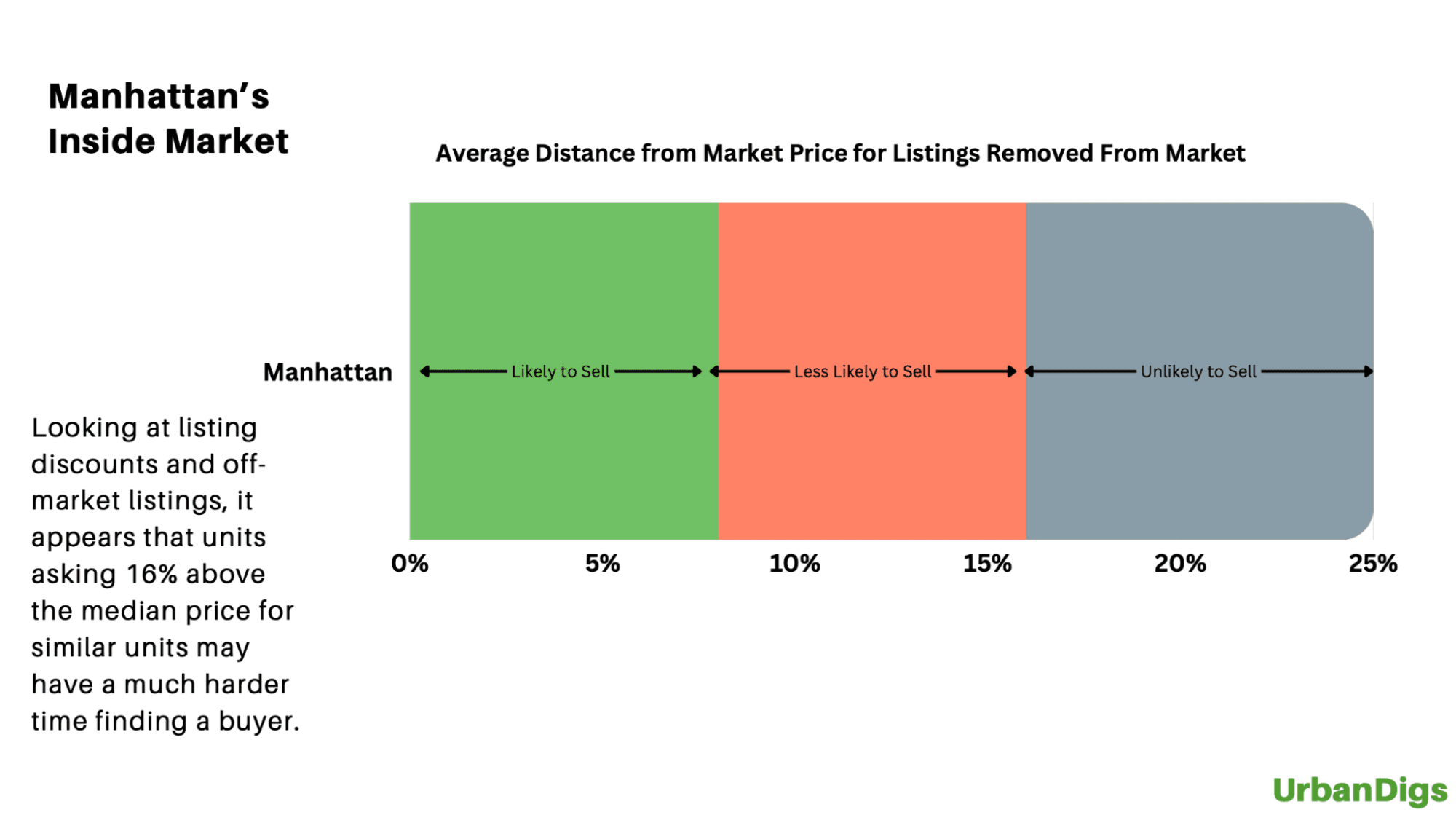
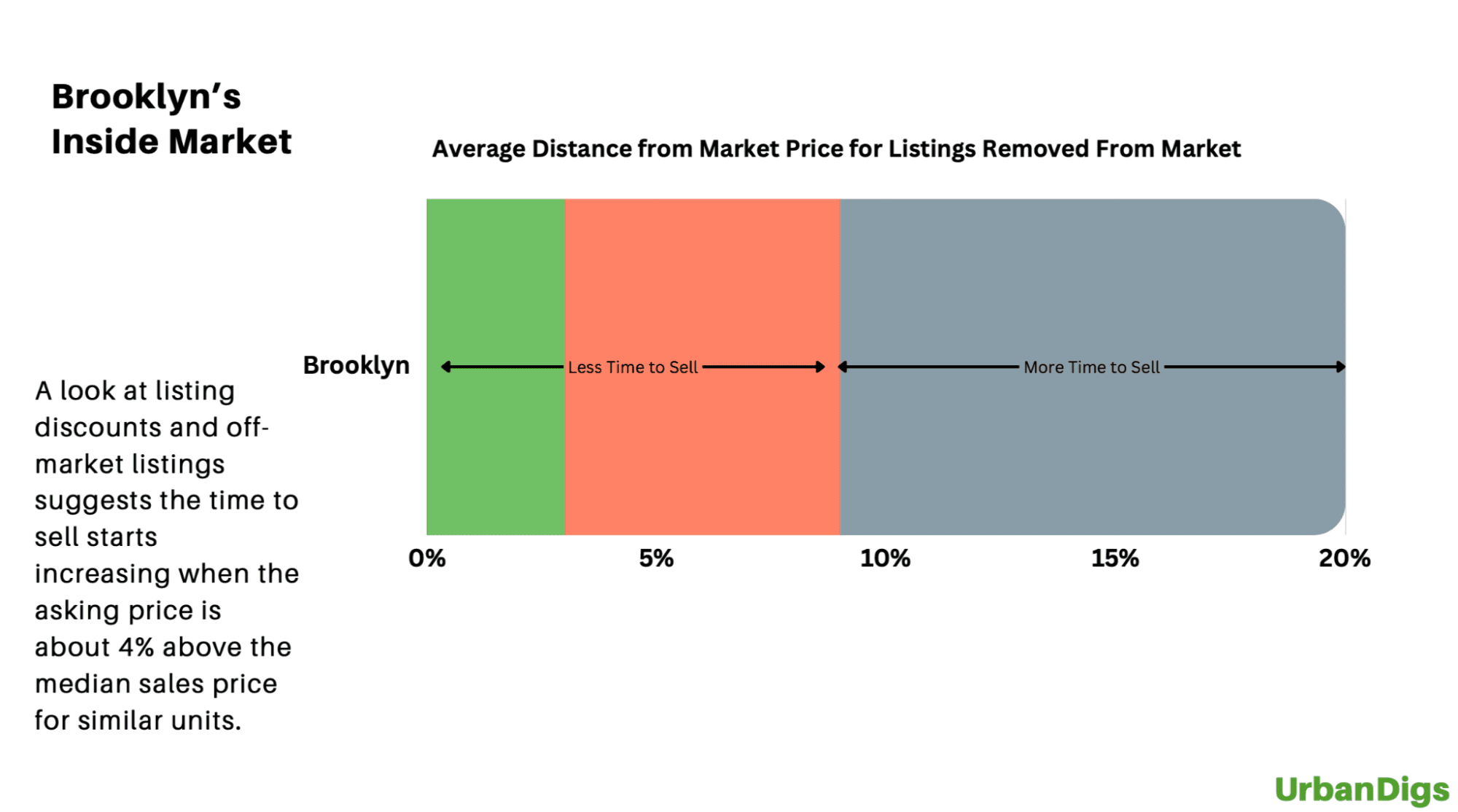
To help combat that misnomer, the following charts from UrbanDigs shed light on why pricing too high frequently results in missed opportunities, while pricing competitively can facilitate a swifter sale with more favorable outcomes for the seller.