If you are drawn to Greenpoint, you are probably choosing between very different kinds of homes. One block may offer a converted loft with soaring ceilings, while the next brings a newer condo on the waterfront or a rowhouse apartment on a classic residential street. That mix is part of what makes buying here exciting, but it also means your search needs a clear framework. This guide will help you compare lofts, new condos, and rowhouses in Greenpoint so you can move forward with more confidence. Let’s dive in.
Why Greenpoint feels distinct
Greenpoint stands out because its housing stock is genuinely varied. City land-use studies describe inner blocks with three- to four-story multifamily buildings, attached residential streets, and converted industrial lofts, while eastern Greenpoint near Newtown Creek remains more industrial and warehouse-heavy.
That variety matters when you buy. In practical terms, your lifestyle, maintenance comfort level, and ownership expectations may look very different depending on the building type you choose.
Greenpoint prices in context
Greenpoint is firmly in the premium tier of north Brooklyn. Current Realtor.com data places the neighborhood’s median listing price at $1.70M, compared with $1.75M in Williamsburg, $1.20M in Bedford-Stuyvesant, and $895K in Bushwick.
That does not mean every home type is priced the same. It does mean you should enter your search expecting Greenpoint to compete closely with Williamsburg, rather than with lower-priced nearby alternatives.
Greenpoint’s three main buying paths
For many buyers, the decision comes down to three broad categories: converted lofts, new development condos, and rowhouse apartments. Each offers a different ownership experience, not just a different look.
A smart search starts by asking what you value most. Do you want character and scale, newer systems and a more building-managed experience, or a classic Brooklyn setting with historic details?
Buying a converted loft
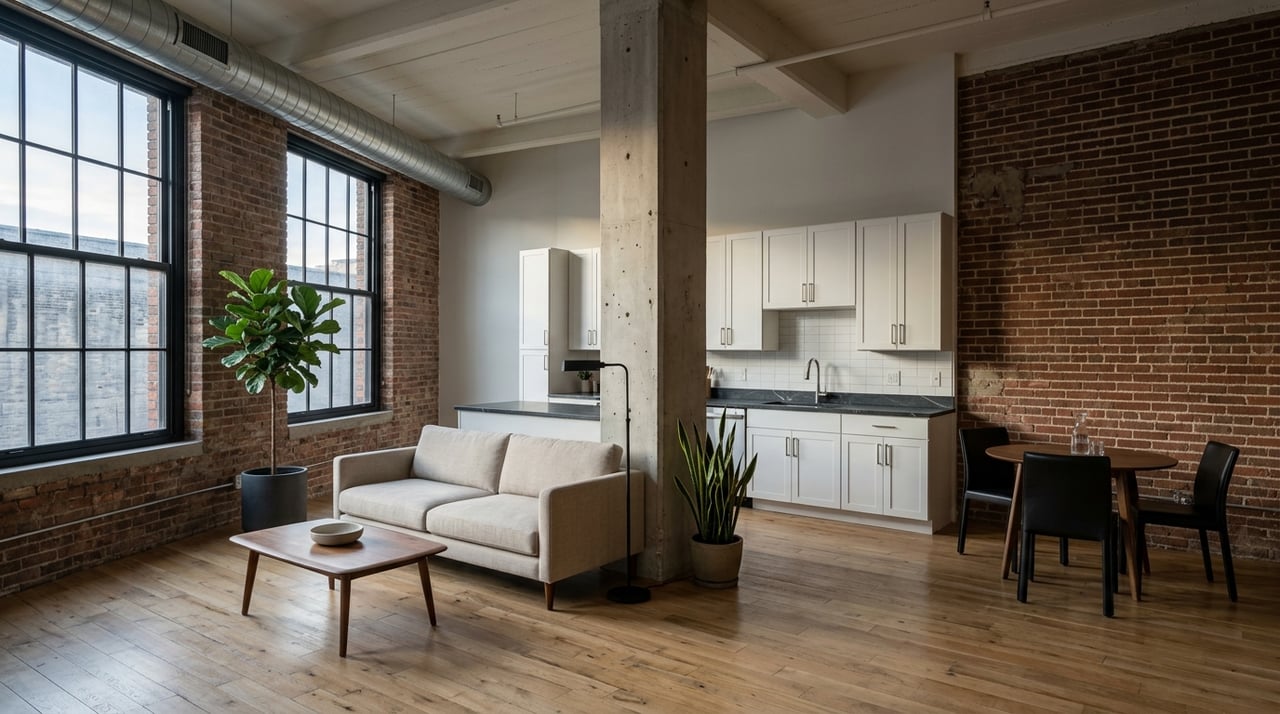
What defines a Greenpoint loft
In Greenpoint, lofts are not just a style trend. City rezoning documents describe mixed loft buildings, some already converted to residential use, alongside low-rise industrial structures.
That means many loft homes began as industrial buildings and were later adapted for residential living. For you, the building’s history is not background detail. It is part of the due diligence.
Why buyers love lofts
Converted lofts often appeal to buyers who want volume, light, and a more distinctive floor plan. You may find higher ceilings, larger windows, and layouts that feel more flexible than a standard apartment.
If design and space matter to you, a loft can offer a strong sense of personality. That can be especially attractive if you want a home that feels less standardized than new construction.
What to review carefully
Because lofts grew out of industrial buildings, the building shell matters. Buyers should look closely at the conversion history, layout, and building systems.
This is where a process-led approach helps. You want to understand not just the apartment’s finishes, but also how the building functions overall and what that may mean for future upkeep.
Buying a new condo
Where new development is concentrated
In Greenpoint, much of the major new development is along the waterfront and in the Greenpoint Landing area. HPD describes Greenpoint Landing as a 22-acre East River site that will eventually include about 5,500 residential units and five acres of public open space.
A 2024 opening in that area added 374 affordable homes, which reinforces how significant this development pocket has become. If you are targeting newer inventory, this waterfront zone will likely be central to your search.
What new condos usually offer
New condos often attract buyers who want the newest finishes and building systems. The appeal is straightforward: you may get a more current aesthetic, modern infrastructure, and a more predictable day-to-day ownership setup.
For busy buyers or relocation clients, that can be a major advantage. A newer building can feel more turnkey, especially if you want fewer unknowns at move-in.
What condo ownership means in NYC
With a condo, more of the ownership experience shifts to the building level. In New York City, condos are class 2 residential properties, and condo boards or managing agents handle filings such as the city’s co-op and condo tax abatement and property registration.
That does not remove buyer responsibility. It means your due diligence should focus not only on the unit, but also on board documents, building finances, and ongoing operational rules.
Buying a rowhouse apartment
Why rowhouses appeal to buyers
Greenpoint also has a preserved historic core. The Landmarks Preservation Commission map shows the Greenpoint Historic District, and rowhouses are described by the Commission as the dominant housing typology in most historic districts.
If you are drawn to classic Brooklyn streetscapes, rowhouse apartments may offer the look and feel you want. These homes often attract buyers who value neighborhood character and lower-scale residential blocks.
What landmark rules can mean
In historic districts, exterior alterations require LPC approval. That can include work involving the façade, stoop, windows, or roof.
For you, that means a rowhouse purchase is about more than interior charm. If future exterior work is part of your long-term plan, you need to factor in approval requirements early.
Why upkeep planning matters
Rowhouse apartments can be deeply appealing, but they often require a more active mindset around long-term upkeep planning. This is especially true on landmarked blocks, where exterior work follows a more structured approval path.
That does not make rowhouse ownership harder by default. It simply means the rules and maintenance outlook may be less flexible than in a newer condo building.
Comparing lofts, condos, and rowhouses
| Home type | Best fit if you value | Main buyer focus |
|---|---|---|
| Converted loft | Character, scale, distinctive layouts | Conversion history, layout, building systems |
| New condo | Newer finishes, building-managed ownership | Board documents, finances, operating rules |
| Rowhouse apartment | Historic setting, classic streetscape | LPC rules, exterior approvals, upkeep planning |
This comparison can help you narrow your search faster. Often, the right choice is less about trend and more about how you want to live and what level of complexity you are comfortable managing.
Commute and access in Greenpoint
What transit looks like
Greenpoint’s core subway line is the G. According to the MTA timetable, the G runs between Court Sq in Queens and Church Av in Brooklyn at all times, so Manhattan subway trips from Greenpoint generally require a transfer.
Greenpoint also has an NYC Ferry landing at 10 India Street. The East River route connects Greenpoint to Wall St./Pier 11, East 34th Street, DUMBO, and Williamsburg landings, with A and B branch splits during peak periods.
How Greenpoint compares with Williamsburg
If you are also considering Williamsburg, transit may become a key decision point. Williamsburg has more subway redundancy, with service in the Lorimer St, Bedford Av, Graham Av, and Marcy Av corridor that includes the L, G, J, M, and Z.
In practical terms, Williamsburg offers more one-seat or near-one-seat Manhattan access, while Greenpoint leans more on the G and the ferry. If commute flexibility is high on your list, that distinction deserves real weight.
How to choose the right Greenpoint home
Start with your ownership style
Ask yourself how hands-on you want to be. If you prefer a more building-managed experience, a new condo may align best with your expectations.
If you care most about scale and originality, a loft may be the stronger fit. If you are drawn to historic context and classic streets, a rowhouse apartment may feel most compelling.
Then review your decision points
Common Greenpoint buyer decision points include:
- Landmark status and exterior restrictions
- Whether the home is a loft conversion, new condo, or rowhouse building
- How much building-level governance and ongoing carrying costs you are comfortable with
- Whether your commute depends on the G alone, the ferry, or multiple subway options
- Whether you prefer industrial character and loft scale, or newer systems and more predictable building rules
This is where an experienced advisor can add real value. In a neighborhood with such varied housing stock, the goal is not just to find a listing you like. It is to choose a property type that fits how you actually want to live.
Why guidance matters in Greenpoint
Greenpoint can reward buyers who do their homework. The neighborhood offers real range, from industrial-era conversions to newer waterfront condos to historic rowhouse apartments, and each path comes with its own tradeoffs.
When your search includes building history, governance structure, landmark rules, and commute logistics, having calm, detailed guidance can make the process more manageable. If you want help comparing Greenpoint homes and building a smart buying strategy, connect with Howard Hannah NYC (Elegran) to schedule a call.
FAQs
What kinds of homes can you buy in Greenpoint?
- Greenpoint offers a mix of converted lofts, new development condos, and rowhouse apartments, along with other multifamily housing on low-rise residential streets.
Are lofts in Greenpoint real industrial conversions?
- Yes. City rezoning documents describe mixed loft buildings in Greenpoint, including buildings that were converted from industrial use to residential use.
Where are most new condos in Greenpoint located?
- Much of Greenpoint’s major new development is concentrated along the waterfront, especially around the Greenpoint Landing area on the East River.
Do rowhouse apartments in Greenpoint come with landmark rules?
- Some do. In the Greenpoint Historic District, exterior alterations require approval from the Landmarks Preservation Commission.
Is Greenpoint more expensive than other north Brooklyn neighborhoods?
- Greenpoint’s median listing price is $1.70M, which is close to Williamsburg at $1.75M and above Bedford-Stuyvesant at $1.20M and Bushwick at $895K.
Is Greenpoint an easy Manhattan commute?
- Greenpoint has subway and ferry access, but Manhattan subway trips usually require a transfer because the G train runs between Queens and Brooklyn rather than directly into Manhattan.